
Phishing and Security Awareness, Cybersecurity Tips & Best Practices
How to Build an AI Governance Framework a Lean IT Team Can Run
September 24, 2026
Read Now.svg)

January 12, 2023
.svg)
.svg)


Cyber criminals have the world at their fingertips thanks to the technology we use every day. But as consumers and business users become more informed, especially through the growing prevalance of Security Awareness Training Programs, the "easy" and well-known scam tactics of years past are becoming less effective.
In today's fast-paced digital environment, criminals are forced to become more creative as their pool of "easy targets" and "low-hanging fruit" begins to shrink.
Private messaging apps have been around for several years, but these key players have been on the rise since 2020. In addition to the need for digital connectivity that arose as a result of the pandemic, concerns about data privacy have also led millions of people worldwide to adopt the use of private messaging apps like Signal and Telegram in lieu of traditional texting and calling, due in part to the advanced encryption and privacy features these apps provide.
The problem? These apps have become a breeding ground for misinformation, scams, and cyber criminal activity thanks to these same encryption and privacy features. Signal and Telegram specifically have laid out protections for users in their privacy statements preventing law enforcement agencies from accessing message content and user data, even in many forms of criminal investigations. While privacy-concerned users appreciate these protections for personal use, criminals are particularly drawn to these benefits as they minimize the risk of being caught running scams and facing repercussions.
Hiring scams are a popular choice for scammers. With unemployment rates at a record low after the Great Resignation (or Great Reshuffle), today's job seekers are finding fewer opportunities now that a large percentage of those earlier job seekers have settled into their roles. Preying on the desperation and anxiety of today's job seekers, scammers find success in communicating with "applicants" over encrypted messaging apps.

Like in traditional phishing and other social engineering tactics, the cyber criminal on the other side of the screen is driven by a simple mission: convince their victim to follow an instruction or take an action that will ultimately provide access to data or funds.
In a hiring scam, this process starts with a simple job post. Sites like ZipRecruiter and Indeed offer options to post a job listing with the start of a free trial account, which cyber criminals look to as a zero-investment entry point for their scam. At the time of this article, ZipRecruiter does not require any employer verification to post a job listing. Similarly, job search groups on social media platforms like Facebook offer another free-of-charge venue for scammers to advertise their false job openings.
The job opening might be written simply — something punchy and eye-catching, with few concrete details about the position — or it may be copied from a legitimate job listing from a real company. The most successful social engineering scammers do their research, utilizing resources available to them online to craft a realistic-looking offer.
When using a hiring site, the scammers will receive applicants' contact information through the in-platform application process. On other sites, they might include instructions within the job listing such as "To Apply, contact ___". Ultimately, their goal is to get in touch with a potential victim and direct them to an encrypted messaging app or another platform in order to conduct their "interview".
After briefly interacting with their victims via message, the scammer will graciously offer them the job — often complete with an offer letter and other "official"-looking documentation. With a job offer in place, the next steps are simple: inform the candidate of the "process" to start the job, such as a direct deposit form for payment or other paperwork to obtain personal information and/or bank accounts.
Though the steps are simple, recognize that scammers will often conduct these operations as a full-time commitment and are willing to spend the time (whether it be a few hours or a few days) building rapport with their targets in order to make the scam successful.
If you find yourself interviewing for a position remotely, here are some quick and easy ways to distinguish legitimate recruiters from scammers:

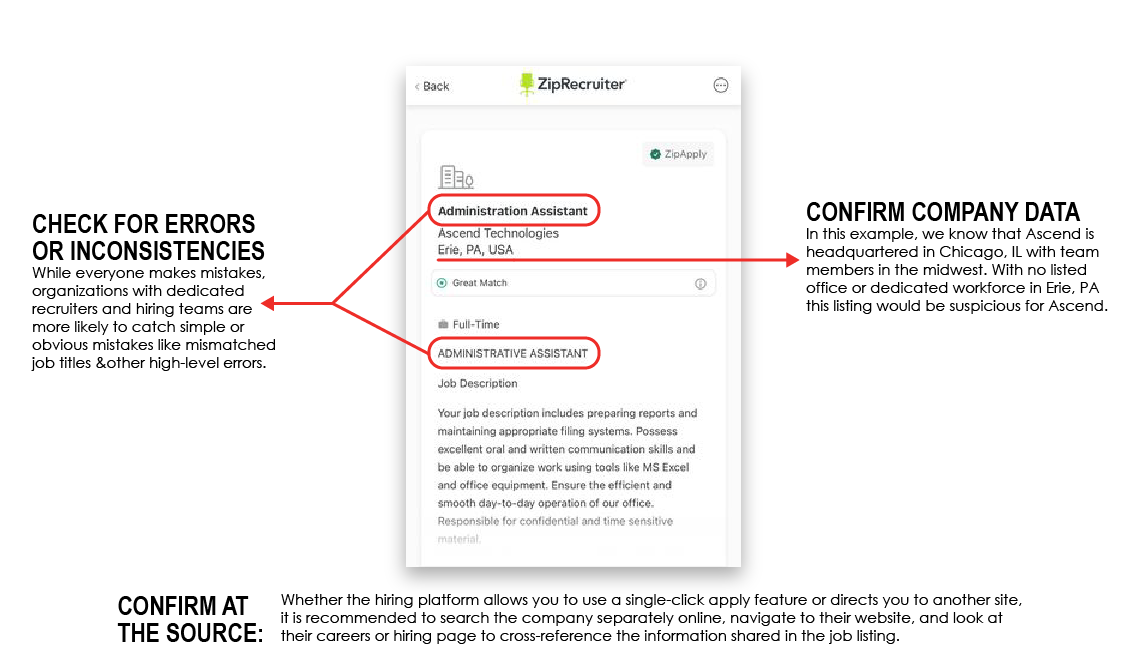
Identifying a scam at the source may not be as straightforward as identifying a scammer in conversation, but there are still some common signs to be on the lookout for. Here's how to tell if a remote job or job listing is a scam:

In many cases, no — most reputable companies, especially larger US-based organizations, will not conduct written-only job interviews over an encrypted messaging platform. Established organizations hiring remotely will use a business video conferencing platform to conduct calls and interviews (Microsoft Teams, Webex, Zoom, etc.), and will not share offer letters or official hiring documentation over a chat app. Learn more about Chat & Video Messaging Scams.
Report the job listing to the site where it is hosted, and report the individual you have been communicating with to the platform the communication took place on. While there may not be a further investigation, especially on an encrypted messaging platform, you can do your part to slow down the individual's next scam by getting their posts removed or accounts restricted.
Unfortunately, there is not much that can be done when these fraudulent operations take place on an encrypted messaging app. Still, you can report the scam to the FBI if you have screenshots or other evidence here.

Phishing and Security Awareness, Cybersecurity Tips & Best Practices
September 24, 2026
Read Now

Phishing and Security Awareness, Cybersecurity Tips & Best Practices
September 22, 2026
Read Now

Phishing and Security Awareness, Cybersecurity Tips & Best Practices
September 17, 2026
Read Now